|
Imitation is the
sincerest
form of flattery... ...although Citroën didn't
think so in 1961
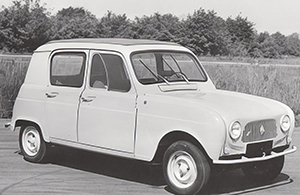
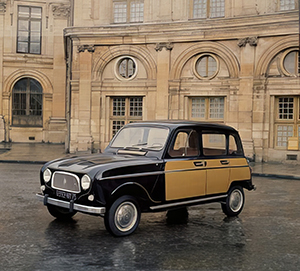
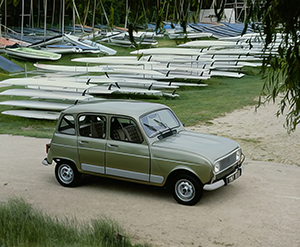
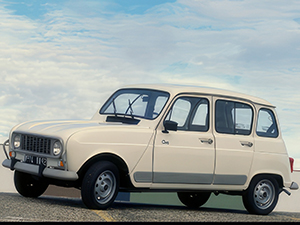
when Renault launched their R4. Renault's
rear-engined 4 CV was, by the end of the fifties, very
dated. More
powerful than Citroën's 2 CV, it was also more
cramped, had poorer road
holding, handling and comfort. The
Regie took the decision to build a front wheel drive,
independently
suspended, utilitarian car, using the 2 CV as a blue
print. Despite
protestations from Citroën, the state-owned company
blatantly copied
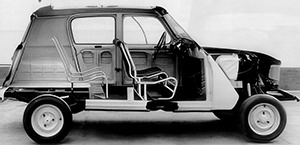
the dash-mounted gearchange, tubular-framed removable
seats,
detatchable body panels, fabric roof and even the
"nose down tail up"
attitude of the 2 CV.
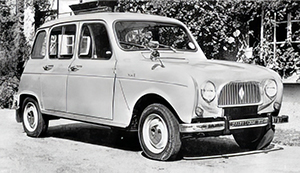
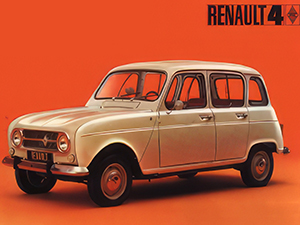
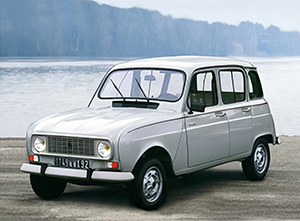
In September 1961 the Renault R4 was
launched. It was initially fitted with the engine and
transmission of
the old rear-engined 4CV with an engine capacity of
747 cc. There was
also a 603cc version sold in France where it was
badged R3 and there
was a deluxe, 6 light version fitted with a bored out
version of the
Dauphine engine with 845cc. The R3 was discontinued in
1962. The
transmission was a 3-speed manual whereas the
thirteen-year old 2CV had
four speeds and the option of a centrifugal clutch.
The R4 had
four-wheel independent suspension. The longitudinal
layout of the front
wheel drive engine and transmission with the engine
mounted behind the
front axle with the gearbox/differential in front
(effectively a
mid-engined front wheel drive design) is identical to
the Citroën
Traction Avant and DS.
|
|
|
|
|
|
|
|
The R4
popularised
the hatchback body style although it was not
the first to introduce a
top-hinged single-unit tailgate both the
earlier Traction Avant
Commerciale and the 2CV Mixte had top-hinged
tailgates.
|
|
|
|
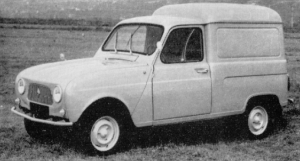
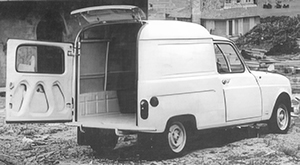
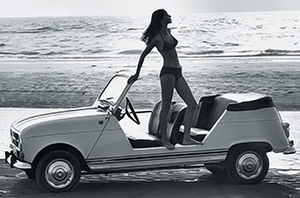
Left
the allegations of plagiarism continued when
Renault launched the
Fourgon light van - a copy of the AK and
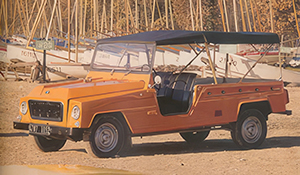
later, in 1968 with the Plein
Air - a copy of the Méhari below.
|
|
|
|
Below the Rodeo was another
R4-based
vehicle - a Méhari competitor
|
|
|
|
|
|
Over the years, the R4 was refined and fitted
with
larger engines. Production in France ceased on
31st December 1992 and
in SLovenia two years later.
|
|
|
|
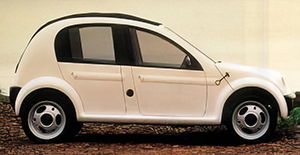
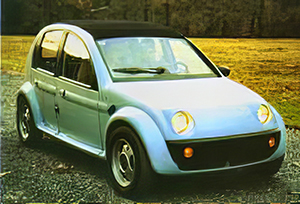
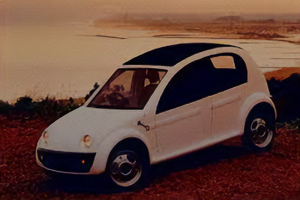
Above and
below
and left and bottom
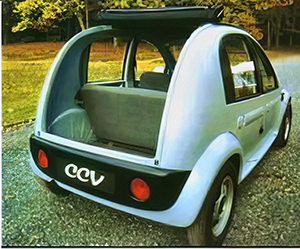
left in 1996, Chrysler
showed its Composite Concept Vehicle - CCV
or two x C V.
|
|
|
|
The CCV was a concept car designed by Bryan
Nesbitt to
illustrate new means of automobile
construction suitable for developing
nations.
The designers at Chrysler stated they were
inspired to
create a modernised Citroën 2CV.
The CCV featured an injection-molded plastic
body with
a fabric roof and an air cooled 2-cylinder
engine driving the front
wheels.
|
|
|
Like the Baby
Brousse
project, the CCV was designed to be cheap and easy to
manufacture in
countries with poor transportation and industrial
infrastructure and
with minimal access to capital and skilled labour. The
car's simplicity
would have ensured longevity and reliability in harsh
conditions and
facilitated DIY maintenance and repair work. Despite its
lightweight
construction, it performed well in front and rear crash
tests although
its lack of structural strength in the doors and side
pillars would
have prevented sales in first world markets.
The CCV was initially developed in the mid 1990's, and
was
earmarked for production beginning with a joint venture
in China.
However, logistical problems with the injection molding
process
combined with the rationalisation that occurred
following Chrysler's
1998 takeover by Daimler-Benz effectively killed the
project. The CCV
project ended in 1998.
|