|
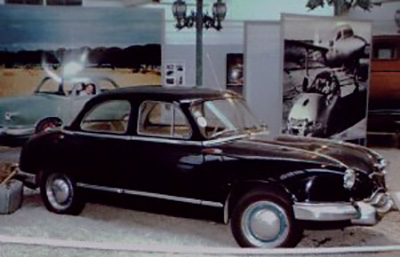
Panhard proved to be
extremely competitive in motor sport and a number of plastic bodied
sports cars were built by Charles Deutsch
and René Bonnet, achieving success at Le Mans between 1950 and
1953.
Without
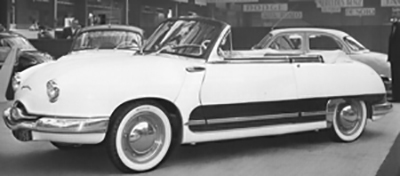
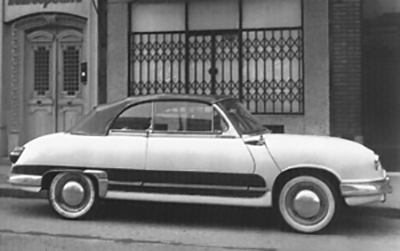
doubt, the best known and most elegant of their creations was the DB HB
R5, one of which was driven with some success by Joe Judt, ex Editor of
the Citroënian,
in competition in the early sixties.
The quasi-official DB range was sanctioned by Panhard.
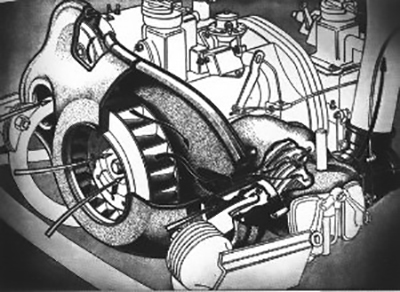
Deutsch had managed to extract 60 bhp from the 851cc flat twin.
To
put this into perspective, the VW Beetle of the era had 40 bhp from
1200cc, the Morris Minor managed 37 bhp from 850cc, the Renault 4
offered 28 bhp from 750cc and the Ami 6 achieved 20 bhp from 602cc.By
the beginning of the sixties, Deutsch and Bonnet's relationship was
beginning
to fragment and Deutsch took his latest creation to Panhard where it
became
part of the official range with the name CD.
|