|
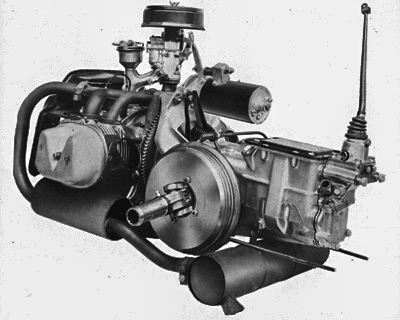
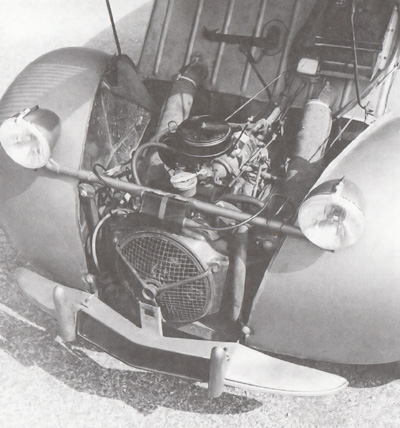
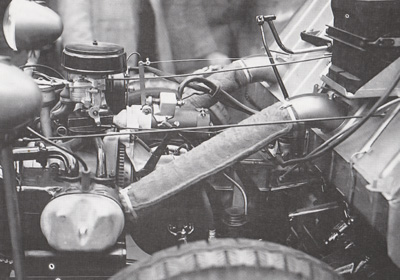
ENGINE
2 cylinders,
horizontally opposed, air cooled
Bore 62 mm Stroke 62
mm Cubic capacity 375 cc
French Fiscal
horsepower : 2 CV
Compression ratio
6.2 : 1
Max power 9 bhp @ 3
500 rpm
Max torque 2 m.kg @
2 000 rpm
Carburettor Solex 22
ZACI
Eight blade cooling
fan
TRANSMISSION
Front wheel drive
via single dry plate clutch and four speed gearbox
|
 |
|
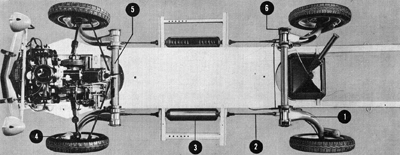
CHASSIS and
SUSPENSION
Chassis
comprising two longitudinal longerons to which are attached
1 suspension
arms
2 Tie rods
3 Suspension cylinder
4 Inertia damper
5 Transverse cross
member (not an anti roll bar)
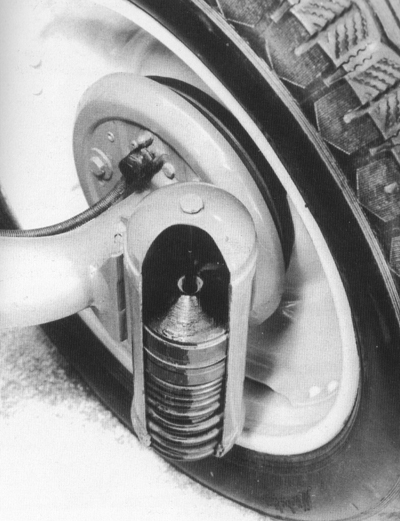
6 Friction dampers
Below cutaway of friction damper
(frotteur)
|
 |
|
|
|
BODYWORK
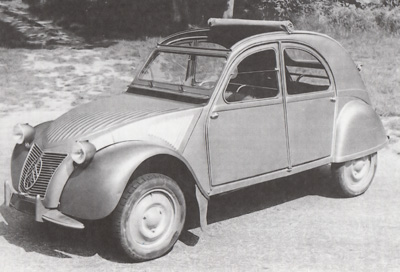
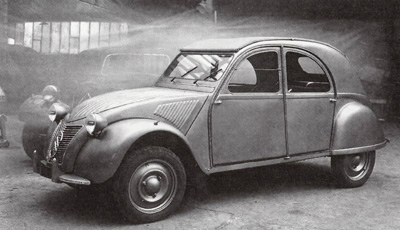
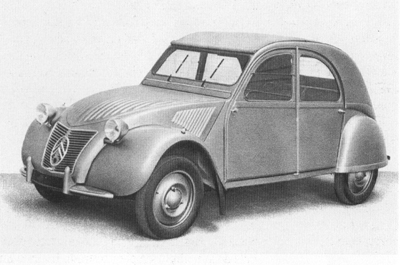
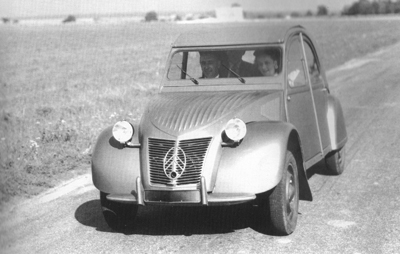
Bonnet with
corrugations
No indicators
One stop lamp
One tail lamp
Grille logo
comprising chevrons inside an oval
Available in
metallic grey only
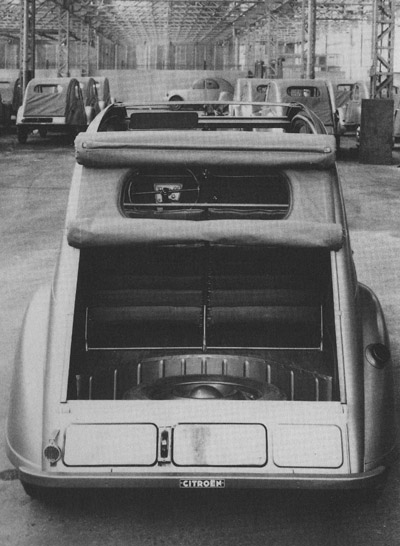
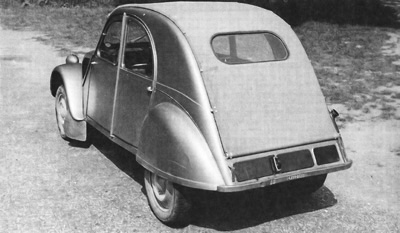
Canvas roof extends
to rear bumper (no boot lid) - a metal
lid was not fitted until 1958.
ELECTRICAL
SYSTEM
6 volts, 50 Ah
battery, Dynamo
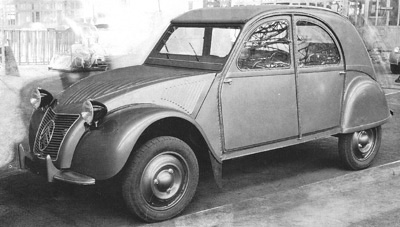
Early French market cars were fitted with only a single
tail and stop lamp which was all that the law required.
|
 |
|
The first few hundred production models had the
headlamps painted black.
|
|

|
 |
 |
|
DIMENSIONS
Length 3.78 m
Width 1.48 m
Height 1.60 m
Wheelbase 2.40 m
Track (front and
rear) 1.26 m
Fuel tank capacity
20 litres
Engine oil 2 litres
Gearbox oil 1 litre
Unladen weight 495 kg
|
 |
|
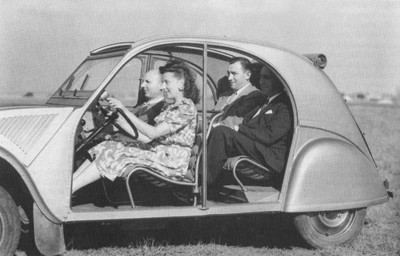
Above this publicity photograph
demonstrates that the 2CV will seat four adults in comfort.
It
also demonstrates that the company intended targeting women even though
the stated intention was to mobilise (mainly male) rural dwellers as
does the picture below.
|
 |
|
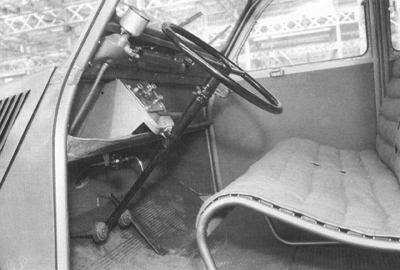
LEFT
|
|
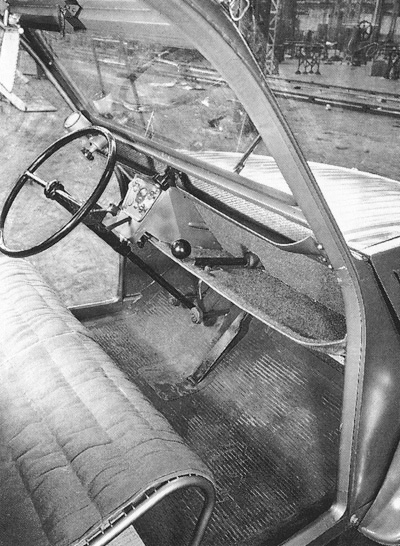
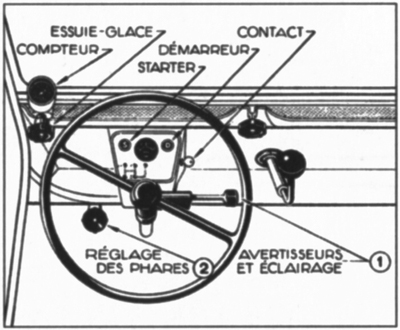
Compteur : speedometer
|
Essuie-Glace : wipers
|
|
Démarreur : starter
|
Starter : choke
|
|
Contact : ignition
|
|
|
Avertisseurs et Éclairage : horn
and lights
|
Réglage des phares : headlamp
beam height adjustment
|
|
|
|