|
|
The following is a
Press Release issued by Citroën's Direction de la
Communication, Service Presse in November 2001 -
Page Two
|
|
FOUNDING OF AN ASSOCIATION TO
MANAGE CITROEN'S HERITAGE
In
order to showcase this rich and eventful history as
well as promoting
the image of the Brand by drawing upon its heritage,
Citroën has
decided to set up an association that will be based at
12, rue
Fructidor, Paris 17.
The main role of this association
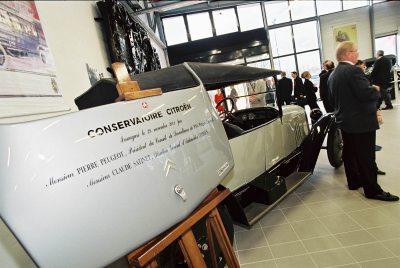
will be to coordinate Le Conservatoire.
|
 |
 |
|
LE CONSERVATOIRE: HOUSING THE
BRAND'S HERITAGE
Le
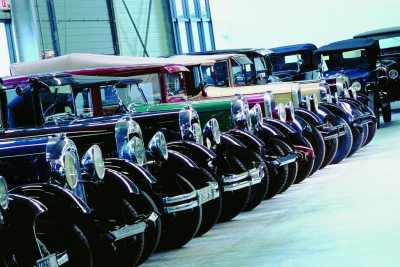
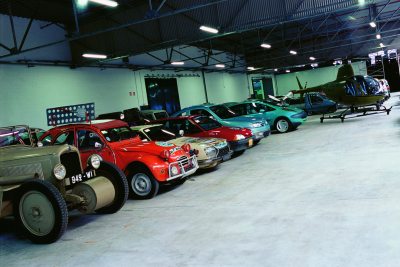
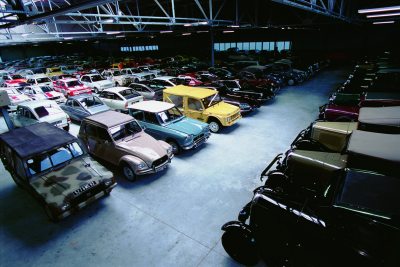
Conservatoire currently houses more than 300 vehicles,
1,400 linear
metres of archives, and a host of parts and objects
relating to the
history of Citroën.
New objects
arrive at Le Conservatoire on a continuous basis. They
include a steady
flow of donations. Initiatives of this type have
gathered momentum in
recent times and Le Conservatoire has put in place
stringent and
attentive monitoring procedures.
The
activity of Le Conservatoire is fundamentally
different to that of a
museum since it will not be open to the public.
However, it will be
able to lend vehicles where necessary, and should thus
be able provide
an effective response to the needs of Citroën's
partners. In this way,
vehicles from Le Conservatoire could be displayed as
part of events
organised in France, Europe and the rest of the world.
|
 |
 |
|
THE MOST SIGNIFICANT MODELS
-
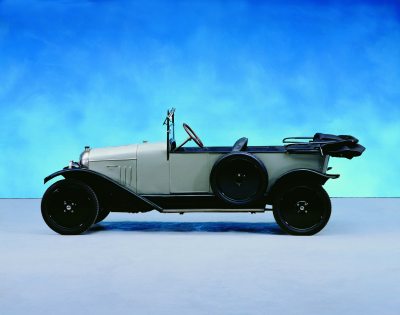
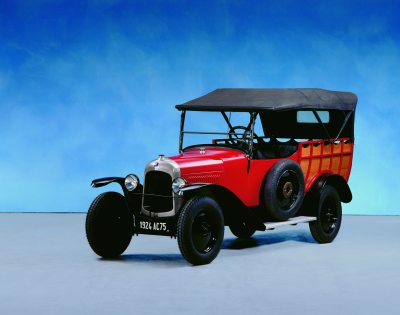
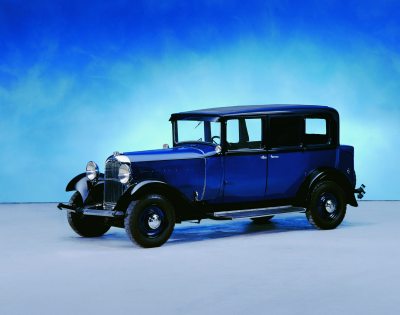
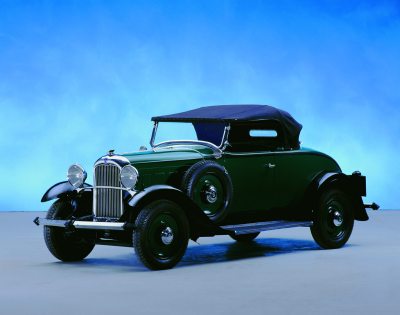
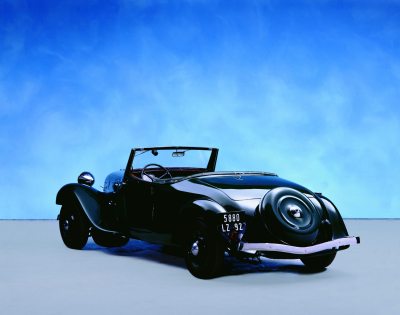
The
vehicles housed in Le Conservatoire are, for the
most part, definitive
versions of the range models produced between 1
919 and the present
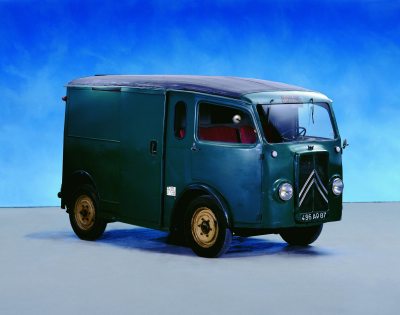
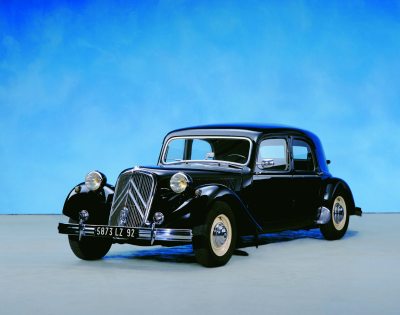
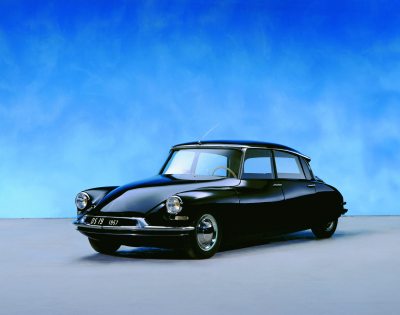
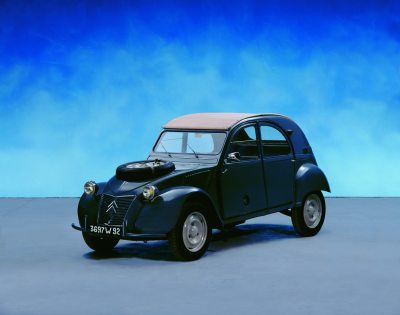
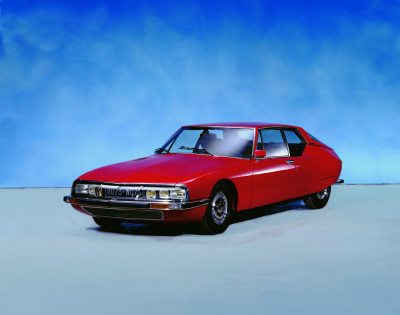
day. The Type A, 2CV, Traction Avant, DS, SM and
many other models are
present in a wide variety of versions. For
example, Le Conservatoire
has examples of the very first Citroën SHP models,
in the C2 or C3
versions of the time.
-
The
second section is devoted to styling studies,
models, concept cars and
prototypes. The models, which were designed for
wind tunnel tests,
cover the period between the two world wars. All
areas of Citroën
research are represented. The concept cars and
prototypes - all of them
unique objects offer a striking resume of the
Brand's creative history.
-
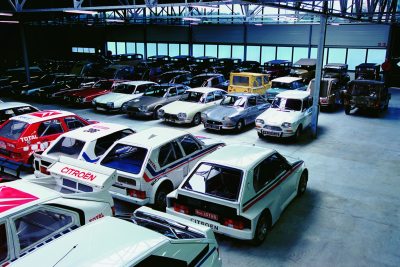
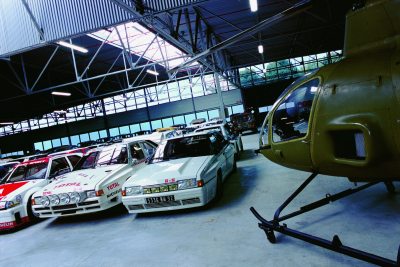
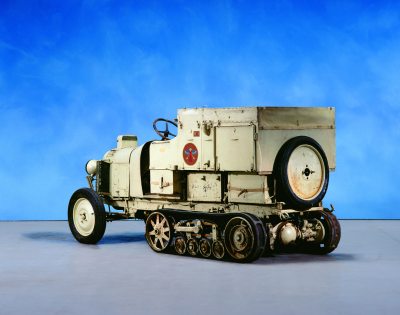
Last,
Le Conservatoire houses the vehicles designed for
racing, for major
expeditions, for long-distance rallies and for all
the other operations
that have played a role in building the legend of
Citroen. The vehicles
on show in this area of Le Conservatoire include
the half-tracks used
in the first crossing of the Sahara and in the
Croisière-Jaune, and the
ZX Rallye Raids, which won several world
championship titles and came
first in the Paris-Dakar five times.
-
New
articles are added to Le Conservatoire's
collect,ion on a continuous
basis. Some are gifts from Citroën enthusiasts,
others reflect efforts
to bring together exceptional items, such as the
design drafts from
Citroën's styling office.
|
 |
 |
|
THE ARCHIVES
A
considerable part of Citroën's heritage is made up of
drawings and
illustrations, registers, economic data and
documentation. All of these
are currently being archived. It is thought that this
classification
work will take some two years.
-
The
archives of Le Conservatoire occupy more than
1,400 linear metres. They
include, primarily, the sketches and plans from
the design office.
Among them, the original styling drawings signed
by Bertoni reflect the
rich talent of the Brand with respect to vehicle
design and
aerodynamics.
-
Le
Conservatoire also holds all the registers of
vehicle chassis numbers,
indicating the date and the exact type of the
vehicles manufactured.
Supplying precise information on the volumes of
Citroën vehicles
produced, these registers have been kept since
1919.
-
In
addition to these registers, Le Conservatoire also
holds a considerable
quantity of industrial, historic, economic and
social data.
-
Concerning
the Citroën network more particularly, Le
Conservatoire also possesses
a vast amount of commercial documentation. Drafted
in French and in
many other languages, this documentation covers a
range of topics,
including pricing and technical details. The
collection includes a wide
variety of documents, such as reports issued by
the governmental
vehicle approval department, and servicing and
repair manuals for the
vehicles in the range.
-
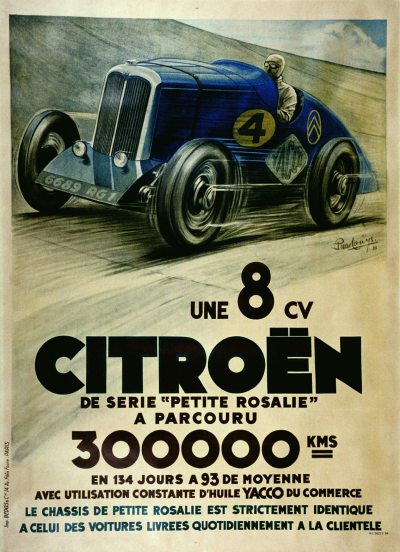
Last,
Le Conservatoire houses a collection of
contemporary posters,
lithographs, pictures, old films and a host of
rare books devoted to
André Citroën and the brand that he founded. It
also houses a
collection of mechanical and industrial parts, as
well as corporate
furnishings, POS items, display panels, enamelled
plates, advertising
objects and miniatures.
|
 |
|
As
a result of all these initiatives, Le Conservatoire is
a working tool
whose main role is to help the women and men of
Citroën to prepare the
future of the Brand while drawing upon specific
components of its past.
|
 |
 |
|
LE CONSERVATOIRE: KEY FACTS
Le
Conservatoire is located in Aulnay-sous-Bois, just
outside the
industrial plant of PSA Peugeot Citroen. Construction
work began in
March 2000 and was completed at the end of November
2000.
|
 |
 |
|
GROUPING THE COMPONENTS OF THE
BRAND'S HERITAGE: A ONE-YEAR TASK
Bringing
together the items housed in Le Conservatoire involved
a large-scale
logistics programme. Operations extended over more
than a year but are
now virtually complete.
Formerly
stored on several sites, the vehicles were transferred
to Aulnay
between June 2000 and September 2001. The main storage
facilities were
in Paris, rue Vasco de Gama, at the Ferté Vidame test
centre and at the
Styling Centre in Vélizy.
|
 |
 |
|
A TOTAL AREA OF 6,500 M2
The area is broken down as follows:
Storage area
-
Vehicles 5,000 m2
-
Paper archives 500 m2
Working area
|
 |
 |
|
MAIN DEPARTMENTS MAKING UP THE
COLLECTION
Comprising more than 300 vehicles,
the collection is made up of four main
departments:-
-
The model range from 1919 to
the present day,
-
Styling studies, exceptional
Citroens and concept cars,
-
Rally raids and racing
department,
-
Archives room and collectors'
objects.
|
 |
 |
 |
 |
© Citroën
Communication 2001/Citroën UK Ltd
 |
|
|













