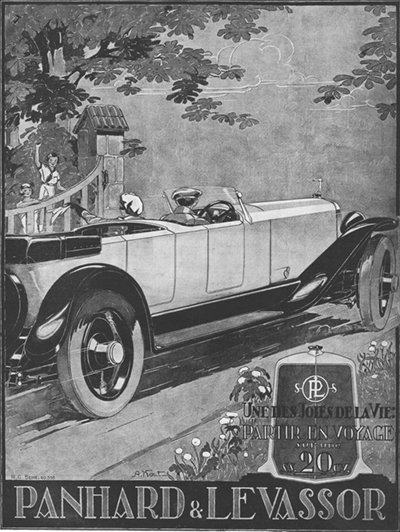
Panhard et Levassor : 1891 - 1967
|
 |
The
firm of Panhard and Levassor was the first in France to manufacture an
internal combustion engine in 1876.
|
|
|
René
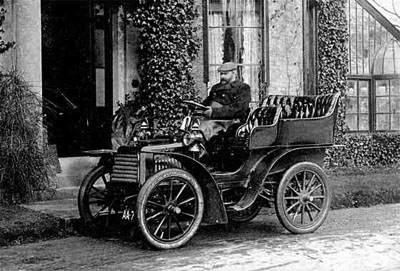
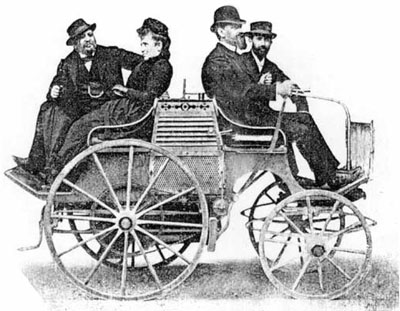
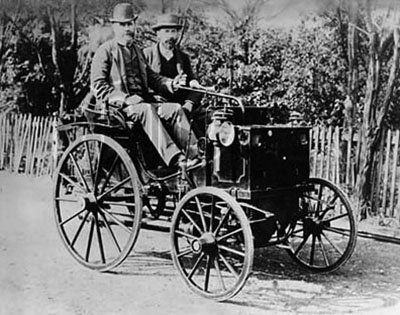
Panhard and Émile Levassor built their first motor car in 1890 -
a mid-engined dos-à-dos horseless carriage powered by a V2 powerplant
built under licence from Gottlieb Daimler.
The following year, they produced their second model and this vehicle is generally reckoned to be the first to establish the architecture of the modern motor car - front mounted engine, clutch mounted between the engine and gearbox and driven rear axle (never mind that most modern cars, being front wheel drive, do not follow this layout; the statement holds true for the majority of cars built during the next eighty years - Panhard too adopted front wheel drive after World War 2).
In 1892, a Panhard car was the first to journey from Paris to Versailles without any major mechanical problems, and then covered the 140 miles from Paris to Étretat at an average speed of 6 mph.
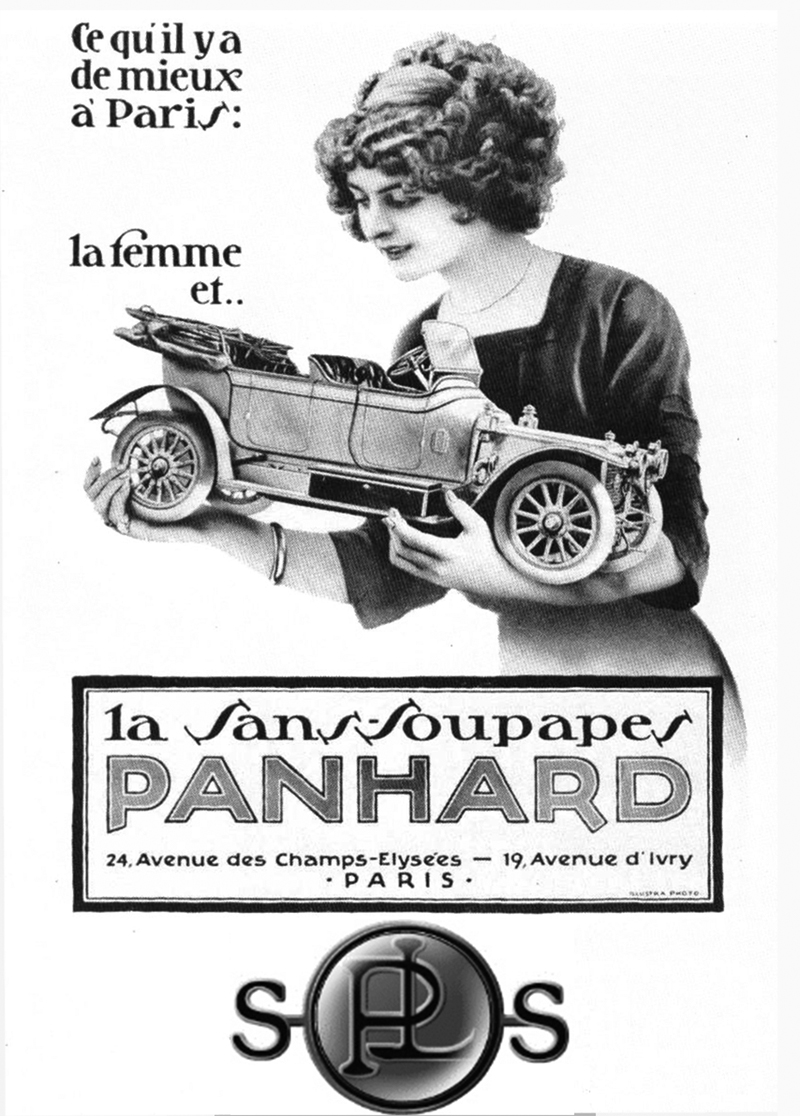
In 1910, Panhard licenced a valveless engine from Knight and this design was used until 1939.

|

|
|
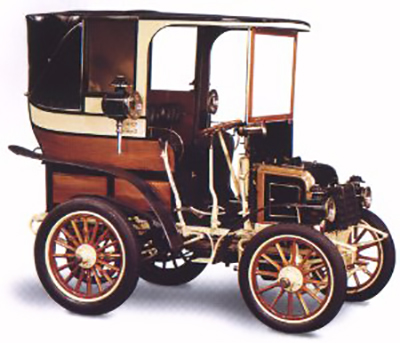
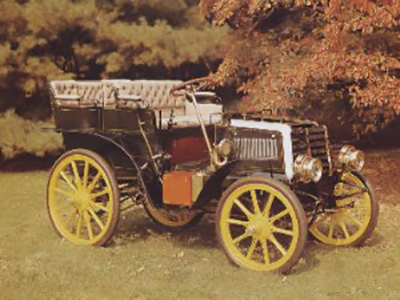
Above
- 1898 Landaulette
Below - 1900 model
|
|

|
|
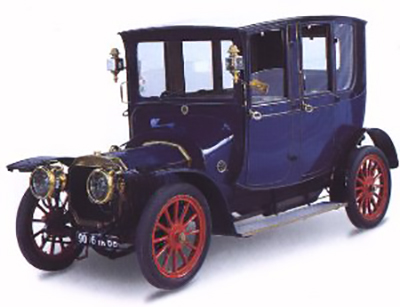
Above - 1904
Berline
|
|
|

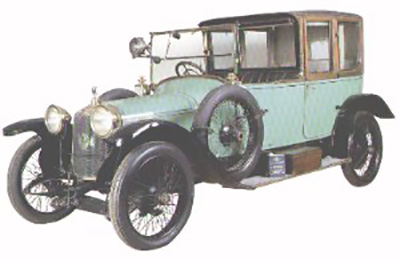
Above - 1914
X 26 Coupé de Ville
|
Pre-war Panhards
were big, luxurious vehicles, powered by a Sans Soupapes (sleeve valve)
6 cylinder engine of between 2,6 and 2,9 litres.
The 1934 Panoramique was a majestic vehicle, very much in the then contemporary American mould
The Dynamic (they employed the Anglo Saxon spelling) of 1936 was pure Art Déco with its streamlined body, headlamps concealed behind grilles that matched that of the radiator and a near centrally placed steering wheel.
|
 |
 |
|
In February 1934,
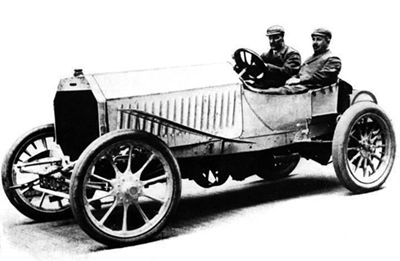
George Eyson set a new world speed record of 214 kph (133.75 mph) in in
this 290 bhp 35 CV special above.
|
The
Panoramique (1934 - 1935) above and below was very American
in style.
|
Above - a 6-CS
Faux Cabriolet Panoramique. |
 |
|
The
Dynamic (1936 - 1939) right was archetypally French with its headlamps
concealed behind grilles that matched the radiator. Fitted initially with
a 2.5 litre, this was later enlarged to 2.86 litres and then 3.8 litres,
6 cylinder engine , torsion bar suspension, hydraulic brakes, a freewheel.
and until 1938, an almost centrally placed steering wheel.
|
 |
|
Les
années grises meant an end to production and post war France
was more concerned with reconstruction than in building large, decadent
cars for the bourgeoisie. France had a socialist government which nationalised
Renault in retaliation for its alleged co-operation with the Germans.
This government introduced the Pons Plan whereby motor manufacturers would only receive supplies if they concentrated on small and medium sized cars and commercial vehicles. The Pons Plan led to Citroën's 2 CV, Renault's 4 CV, Peugeot's 202, Simca's 8 and Panhard's Dyna - the name was chosen to recall the Dynamic but apart from the name, the car had nothing in common with its majestic predecessor.
|
 |
|