Evolution
|
|
Over its 20 year lifetime,
the DS was refined and improved and the range was extended to include numerous
new variants. The DS was built in England, Belgium, South Africa and Australia as well as in France.
|
 |
|
|
|
|
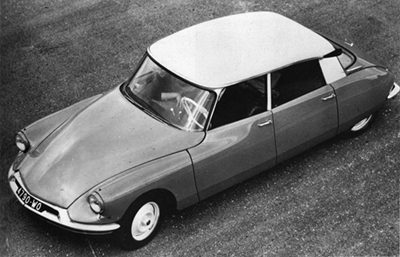
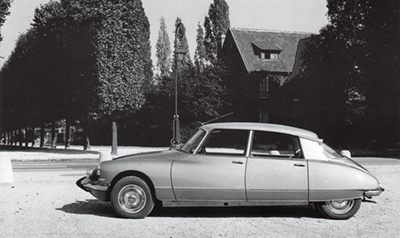
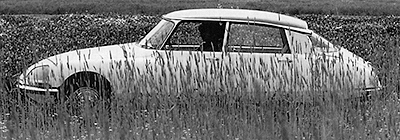
| Above early IDs had painted headlamp surrounds and very small wheel embellishers |
|
|
In 1960, the 6 volt electrical system was replaced by a 12 volt system and the following year, the DS's power output was upped to 83 bhp.
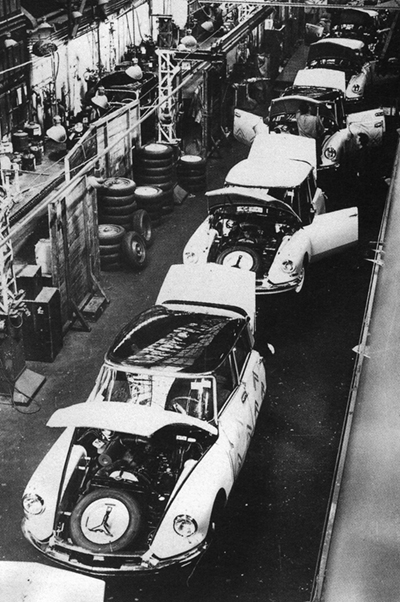
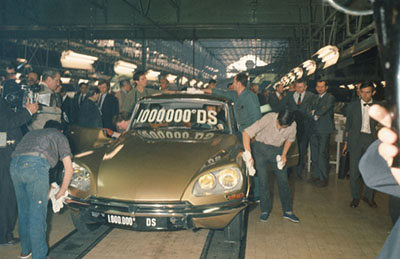
Left the production line at Quai de Javel |
|
|
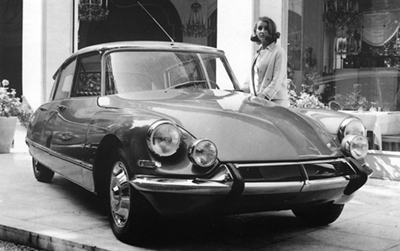
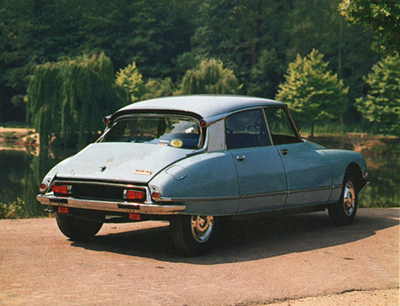
| Above in 1962, the front end of the car was tidied up resulting in a 8 kph/5 mph improvement in top speed. |
|
|
| Above and below quartz halogen auxiliary driving lamps were introduced in 1964. |
|
|
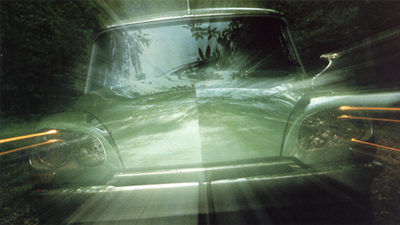
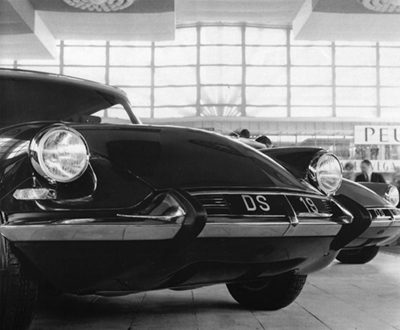
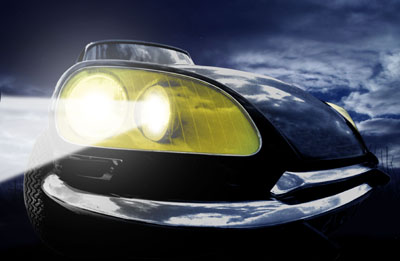
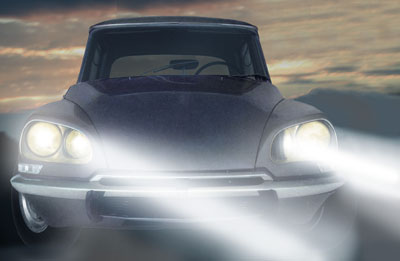
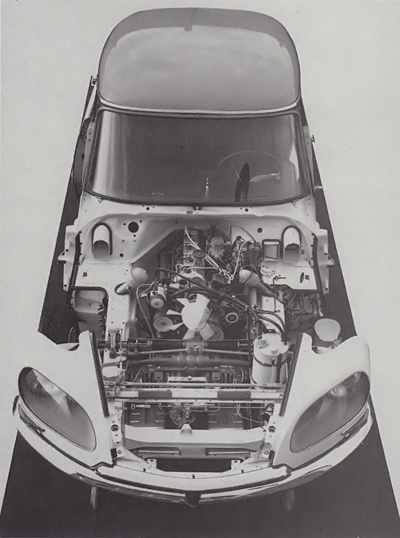
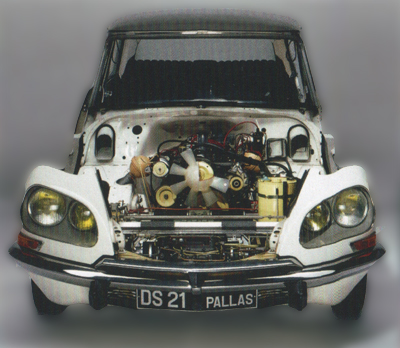
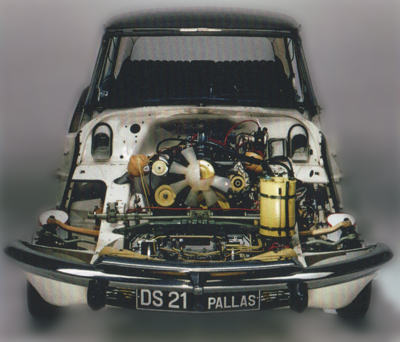
| Left, below left and below the front end of the car was redesigned once again in 1967 with four lamps mounted behind transparent faired in panels and on top of the range models, the inner pair of lamps swivelled with the steering while the outer pair were linked to the suspension maintaining a level beam irrespective of whether the car was accelerating or braking. |
 |
|
 |
 |
|
In 1968, the DS21 gained an extra pair of horses while the DS 19 gained thirteen.
Along with the additional power came a name change to DS 20.
The ID became D Spécial if equipped with the old engine or D Super if fitted with the DS 20 engine.
All cars gained a new dashboard too.
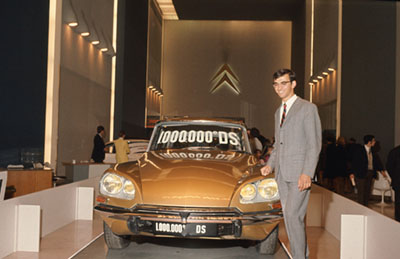
In 1969, the millionth DS was built and to celebrate, the DS 21 was offered with Bosch electronic fuel injection boosting power to 139 bhp.
|
 |
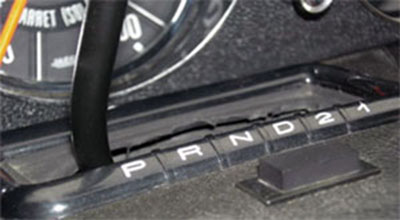
| A Borg Warner fully automatic gearbox was made available in 1971. |
 |
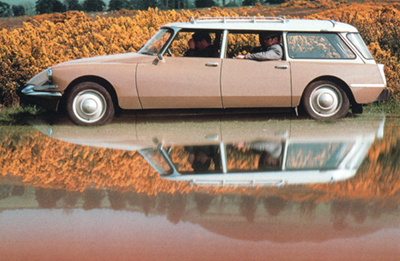
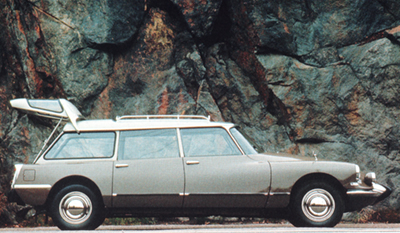
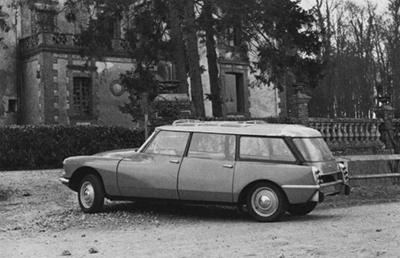
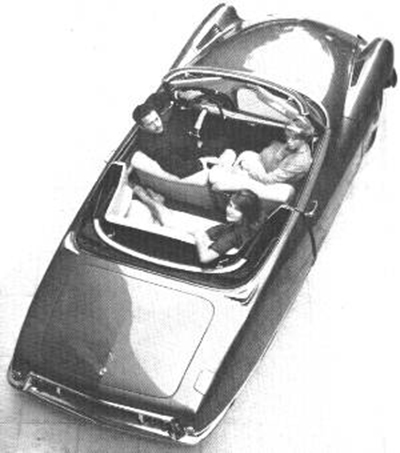
| Other variants included
the Prestige which was fitted with a glass panel separating the
chauffeur from the owner and the Decapotable, both of which were
built by Henri
Chapron. |
 |
 |
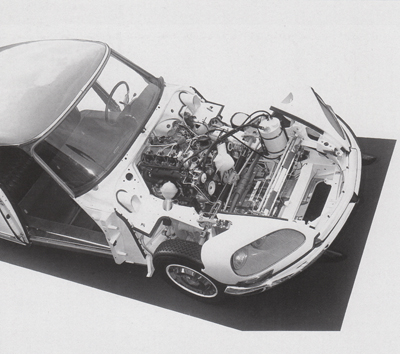
| The DS was an incredibly successful rally car and was also used as the basis for the incredible Maserati powered SM.
Another variant was the luxurious Pallas which featured superior external finish and improved interior including leather upholstery. On 24th April 1975, production of the DS ceased.
Total production of all models came to 1,455,746.
Its replacement, the CX was nowhere near as innovative, being evolutionary rather than revolutionary and that car's successor, the XM continued this trend, representing the refinement of existing concepts rather than the redefinition of those concepts.
|
|
 |
| In 1970, a five speed manual gearbox was offered. |
|
|
|
In 1972, the DS 21 was replaced by the DS 23 equipped with a 2 347cc engine developing either 124 bhp when fitted with a carburettor or 141 bhp when equipped with fuel injection.
The D Super was available with the DS 21 engine and 5 speed gearbox and was called the D Super 5-21.
|
|
|
|
|
|
|
|
|
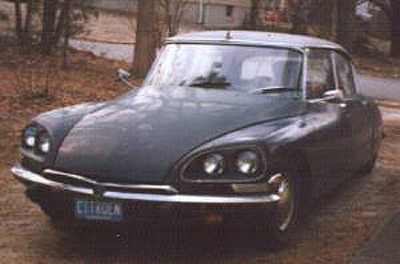
| Above in the United States of America, protectionist Federal regulations imposed fixed headlights without the glass nacelle and ultimately led to the demise of the marque in that marketplace. |
|
|
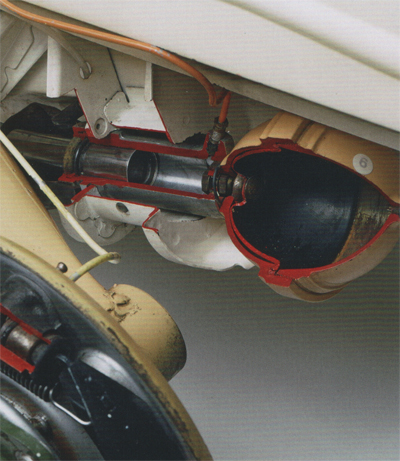
The C5 and C6 broke with tradition and used a new form of hydropneumatic suspension. High pressure hydraulics are no longer emplyed for the braking or steering and electronics are widely employed.
It is unlikely that the world will ever see such a fundamentally new car as the DS again. It is true that many manufacturers show concept cars that are truly innovative but a combination of international legislation and economics ensures that these are never put into production. Had the DS merely been such a concept car, it would have been sufficient for an entry into any history of the automobile. The fact that it made it into production renders it unique.
The DS was sold worldwide and met with a mixed reception - ranging from stupefied incomprehension to unalloyed adulation.
|
 |
|