Citroën SM
|
|
|
In
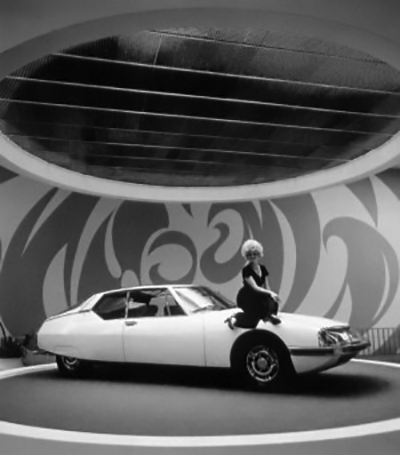
1970, Citroën launched two new models -
the SM and what was probably the most
technically dense car within its market
sector, the GS which beat
the SM to the Car Of The Year Award that year.
While the
GS was a technological tour de force since it
introduced self levelling suspension and
powered disc brakes to the mainstream, the SM
was Citroën's long awaited flagship, intended
for a wealthy, discerning elite.
The SM was the product of over
half a decade of development work
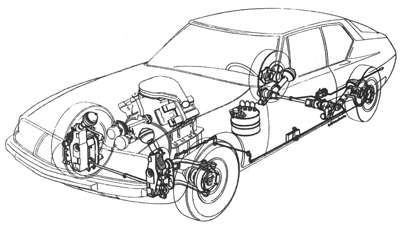
and its technical solutions to the problems of
powerful front wheel drive cars included
DIRAVI - DIRection A Rappel AsserVI or
VARIPOWER as it is known in Anglophone
markets. This was a fully powered steering
system which provided maximum power at low
speeds with the power being reduced as
velocity increased. This was coupled
withpowered centering and only two turns from
lock to lock. Centre point steering (where the
pivot point passes through the centre of the
tyre tread contact point was possible thanks
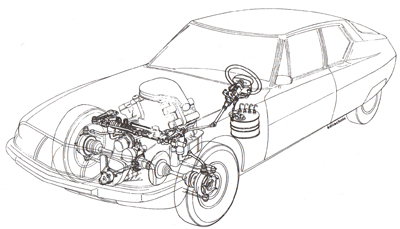
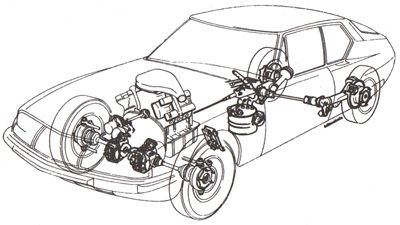
to the front brakes being mounted inboard on
either side of the differential.
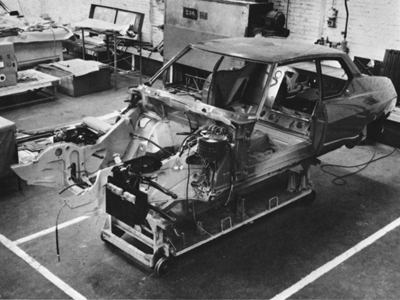
Hydropneumatic,
self
levelling suspension was carried over
from the DS although the mounting points for
the suspension arms were in front of the
wheels rather than behind them as in the DS.
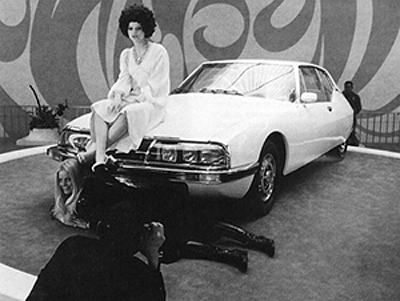
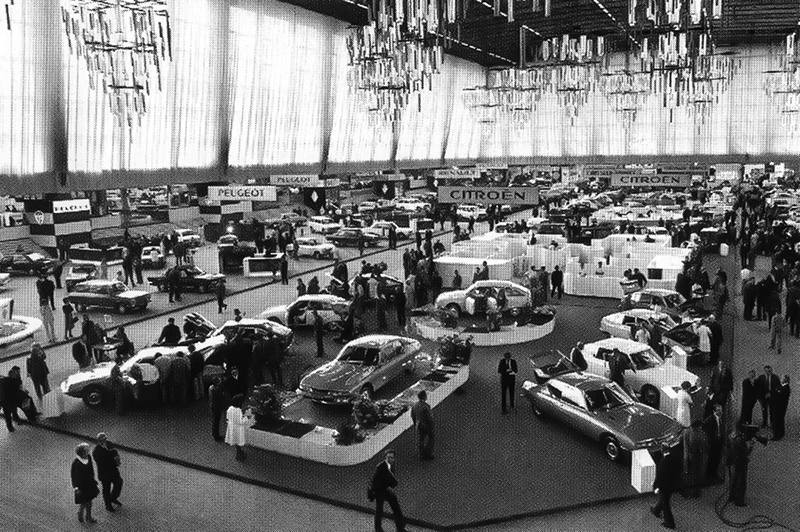
The SM was
launched at the Geneva Salon in the spring of
1970 and was shown, alongside the new GS, at
the Paris Salon in October of that year.
|
 |
|
|
|
Technical
specification 1971
|
|
Number of cylinders
|
V 6
|
|
Cubic capacity
|
2 670 cm3
|
|
Bore and stroke
|
87 x 75 mm
|
|
Fiscal power rating
|
15 CV
|
|
Fuel system
|
Three Weber
carburettors
|
|
Maximum power output
in brake horse power
|
180 SAE @ 6 250 rpm
170 DIN @ 5 500 rpm
|
|
Valve gear
|
4 overhead camshafts,
2 overhead valves per
cylinder
|
|
Transmission
|
Front wheel drive via
5 speed manual gearbox
|
|
Brakes
|
Fully powered discs,
front brakes mounted
inboard, parking brake
operates on front brakes
|
|
Suspension
|
Self levelling, fully
independent, variable ride
height, hydropneumatic with
anti dive, anti squat
geometry
|
|
Steering
|
Rack and pinion,
DIRAVI/Varipower
|
|
Dimensions
|
|
Length
|
4,890
m
|
|
Width
|
1,840
m
|
|
Height
|
1,320
m
|
|
Wheelbase
|
2,950
m
|
|
Front
track
|
1,530
m
|
|
Rear
track
|
1,330
m
|
|
Weight
|
1 450
kg
|
|
|
Maximum speed
|
220 kph / 137 mph
|
|
 |
|
|
|
Above - suspension
layout
|
|
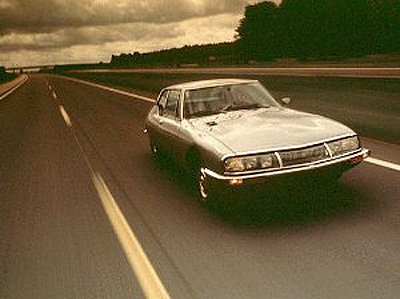
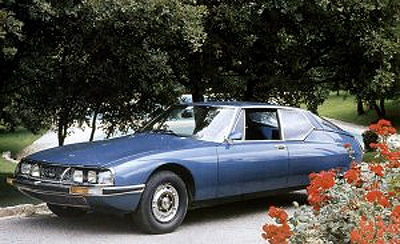
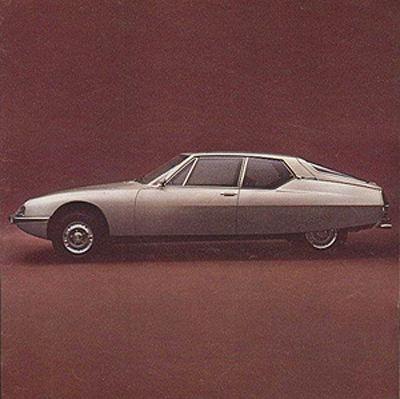
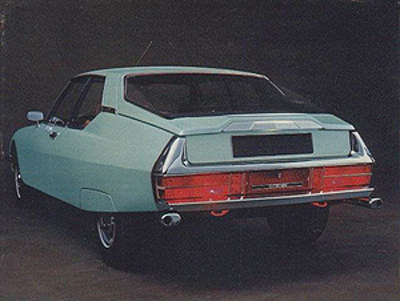
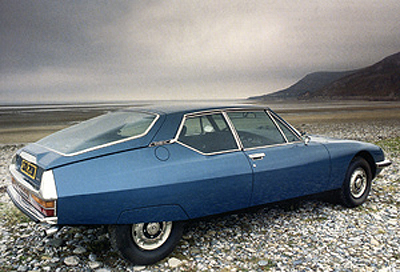
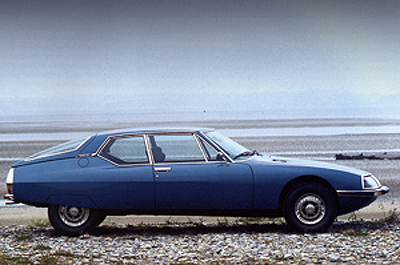
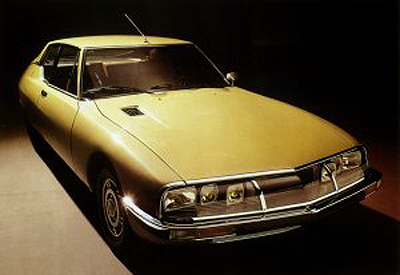
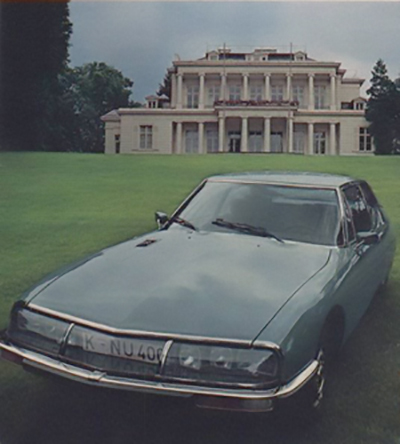
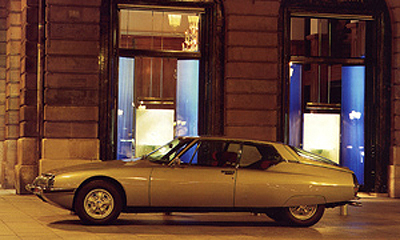
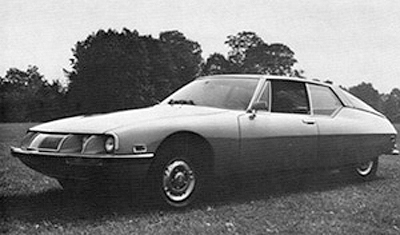
The
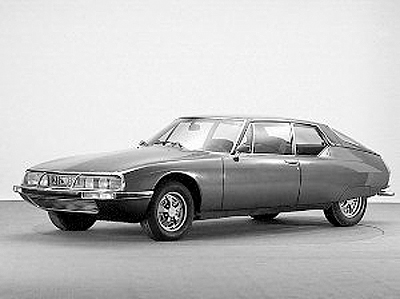
SM , despite being longer than the
DS, was a 2 + 2 Grand Tourer.
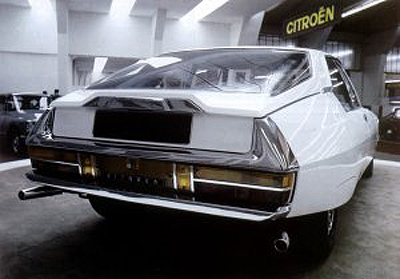
The
body was styled by Robert
Opron who was also responsible
for the GS and CX
.
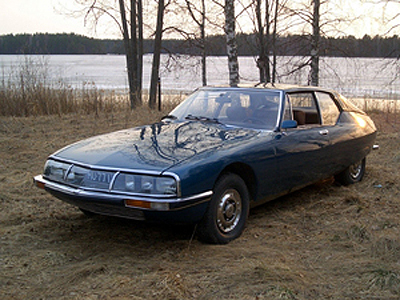
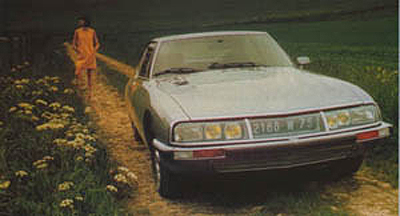
The
glass
front housed no less than six
headlamps, all of which were
connected to the suspension to
maintain a constant beam height
whether accelerating or braking
while the inner pair were connected
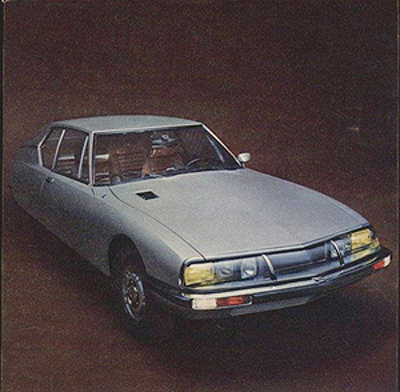
to the steering. American
customers had to put up with
four fixed round lamps with no glass
nacelle.
|
|
|
|
|
|
|
|
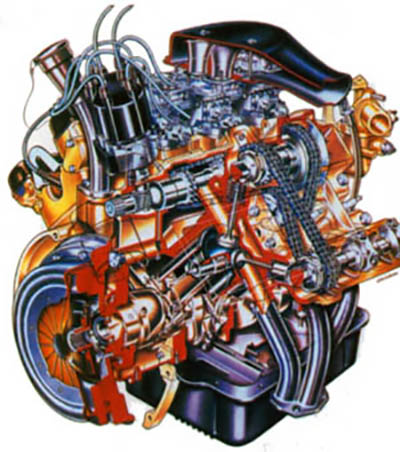
In
1973,
power output was increased to 188
bhp SAE @ 6 250 rpm/178 bhp DIN @ 5
500 rpm thanks to the fitting of
electronic fuel injection. Top speed
increased to 228 kph.
In
1974, the SM Automatique was
launched, fitted with a 2 965 cm3
engine developing 190 bhp SAE @ 6
500 rpm/180 bhp DIN @ 5 500 rpm, fed
by three Weber carburettors and a
three speed Borg Warner automatic
gearbox offering a top speed of 205
kph.
Escalating
fuel
prices in 1975 coupled with the
unimaginative dead hand of Peugeot
killed the SM off.
|
 |
|
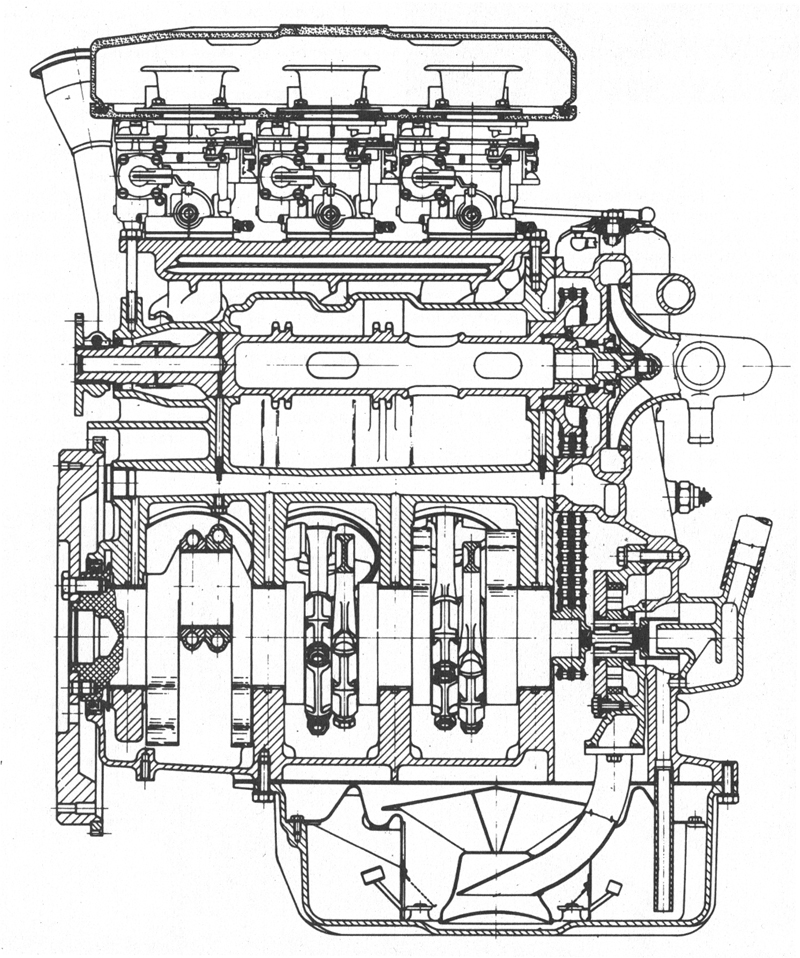
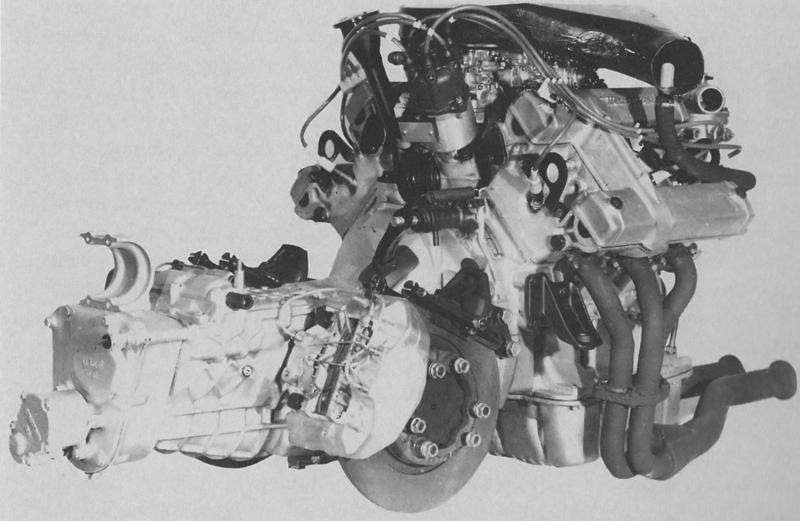
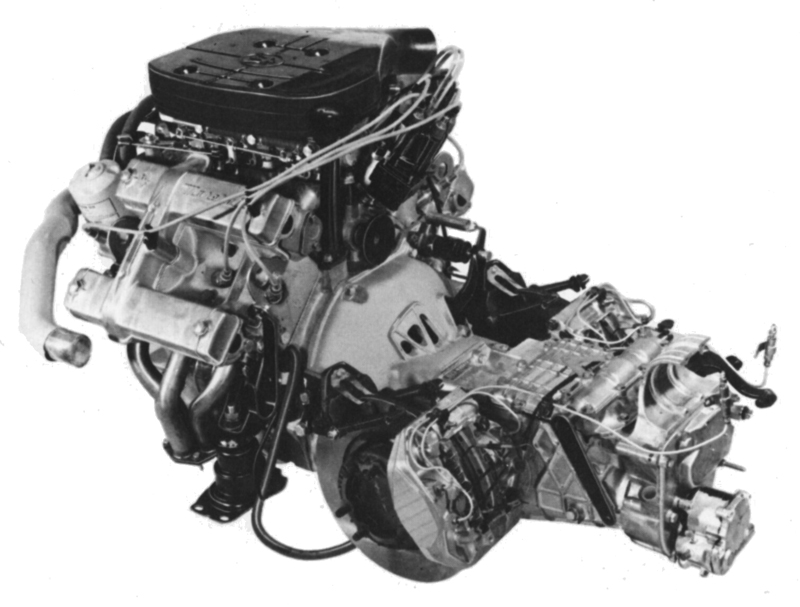
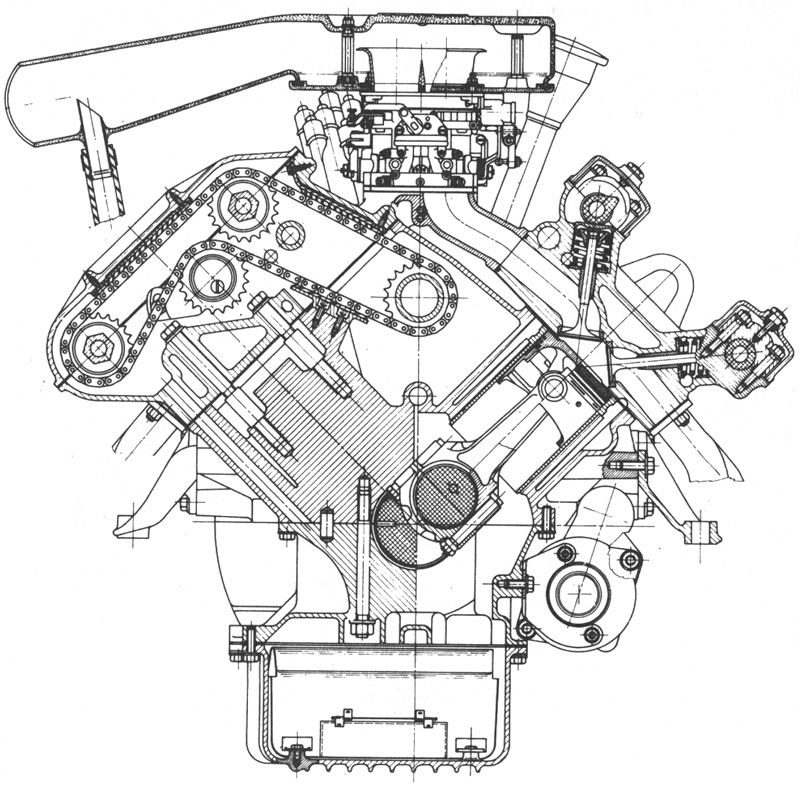
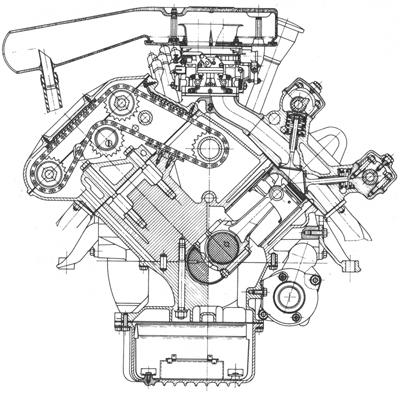
Click on the two engine cutaways to
see large version (will open in new
window)
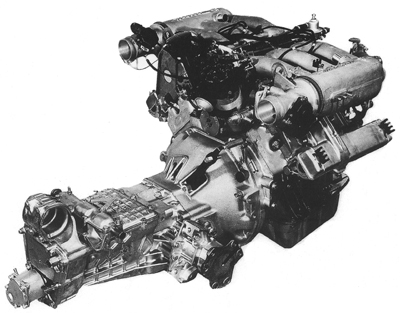
Below the fuel
injected engine
|
 |
|
|
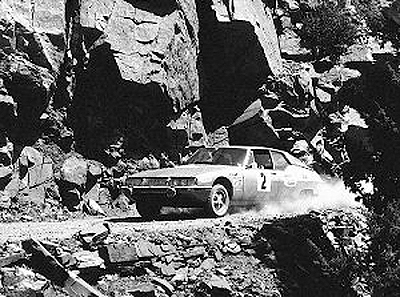
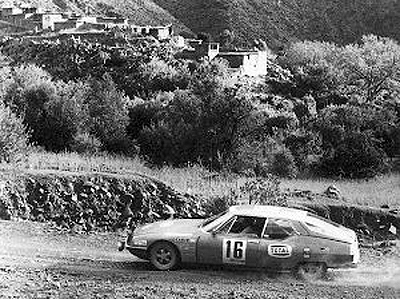
Above and below
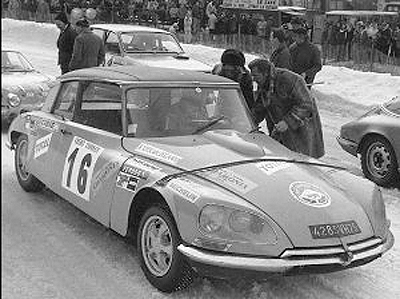
in its first outing, the gruelling
Rallye du Maroc, the SM came first
in Group 4
|
|
|
|
|
|
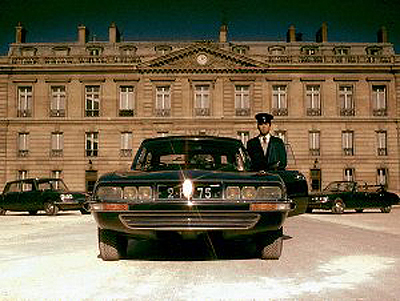
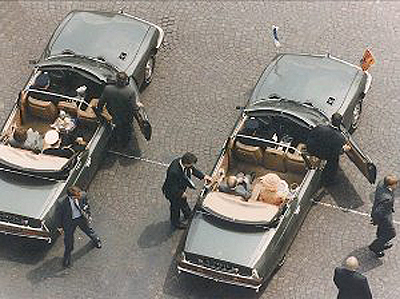
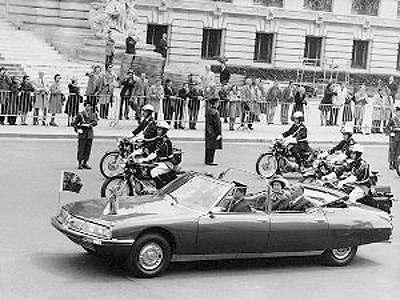
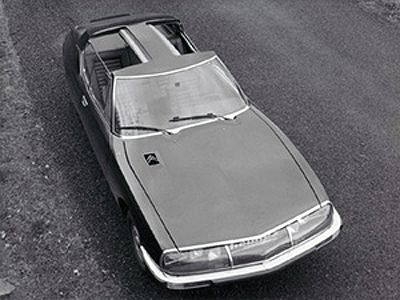
Above,
below and below
left - Henri Chapron
built two four door drophead
SMs for the Elysée
|
|
|
|
|
|
|
|
|
|
|
|
|
 |
|
|
|