 |
|
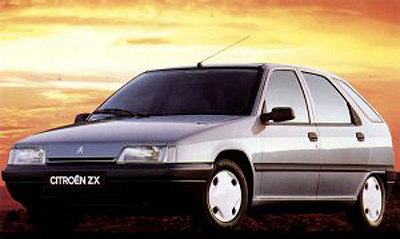
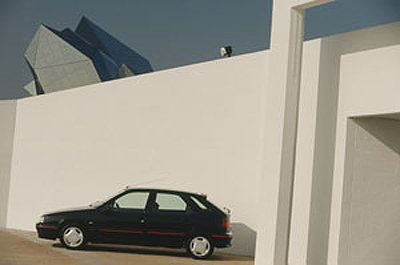
Five petrol engined
versions with four different trim levels, marketed as
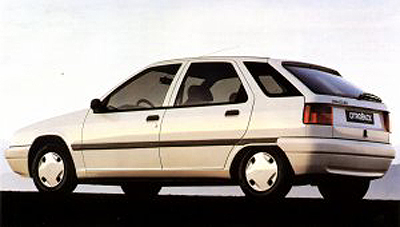
the ZX Collection, were available at launch - the Reflex
1,1 powered by the 1 124cm3 engine
from the AX, the 1,4 Reflex and Avantage
powered by the AX and BX 1 360cm3 unit, the
Aura 1,6 using the BX 1 580cm3 unit
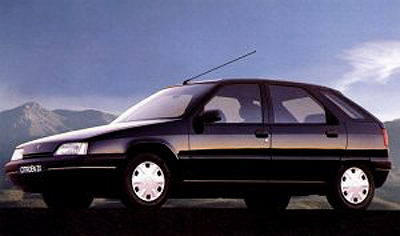
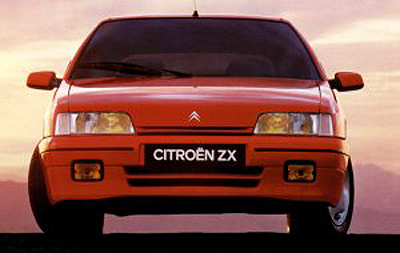
and the Volcane 1,9 which used the 122 bhp
fuel injected 1 905cm3 engine based on the
unit fitted to the BX GTi.
|
 |
 |
 |
| Reflex above |
 |
| Volcane
above |
|
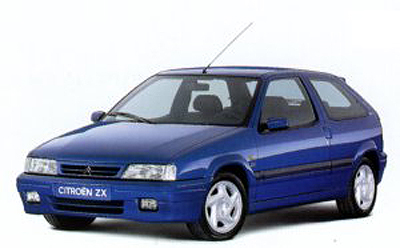
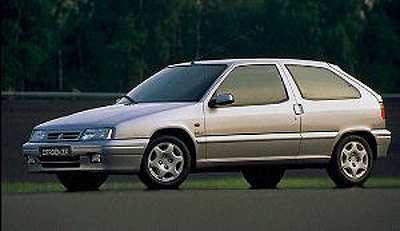
In 1994, the range
was further widened with a number of limited editions
and options such as air conditioning were introduced.
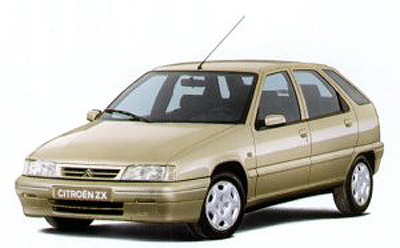
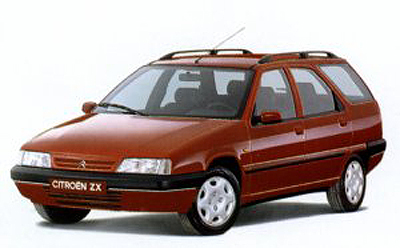
The following year
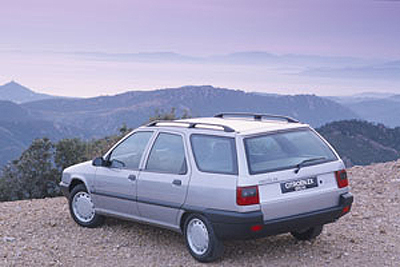
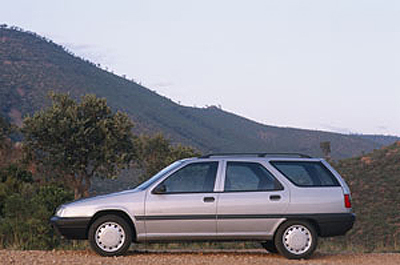
the range was face lifted with a new nose and a Break
estate car was launched.
|
 |
 |
 |
 |
|
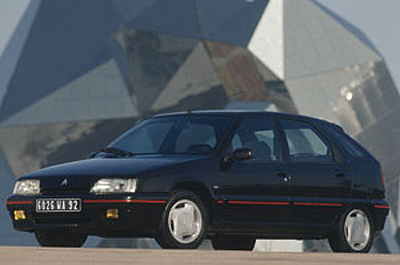
The ZX continued in
production until it was replaced in 1997 by the Xsara
which employs much of the ZX's underpinnings but
housed in a new but less characterful body.
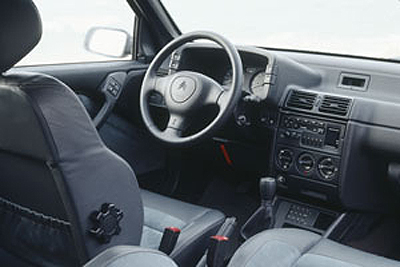
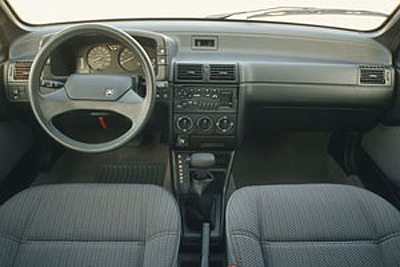
Interior room was
maximised by virtue of a sliding rear seat which
allowed the boot space to be increased or decreased as
required.
|
 |
 |
|
The ZX is also
built in China where there is a four door, three
volume version called the Fukang
988 .
|
 |
|
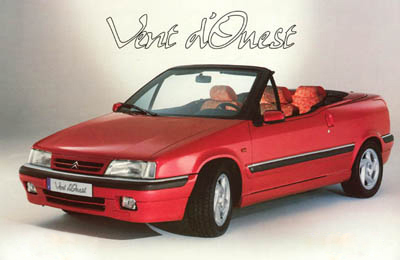
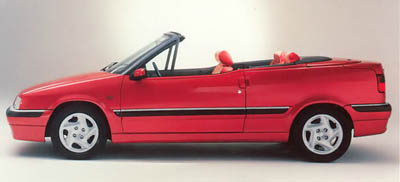
In 1994, Heuliez in conjunction with ASC proposed this
ZX Vent d'Ouest drophead.
|
|
Car
Magazine - Where's the progress? 1971 GSX3 compared
with 1991 ZX Reflex
|
|
|
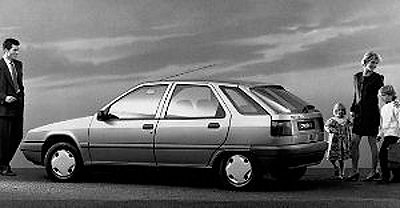
The ZX was launched
on 16 March 1991 and filled the gap between the AX
and BX
.
Prior to the
launch, the stupendously successful ZX
Rallye Raide was entered (and thrashed the
competition) in a number of events including the 1990
Baja Aragon and the Paris Dakar to arouse interest in
the ZX although mechanically, they were as alike as
chalk and cheese.
Work on this project
had started in 1986 and the car was similar in size if
utterly different in conception from the GS
. Where the GS employed self levelling hydropneumatic
suspension, the ZX used front Macpherson struts and
rear torsion bars and unlike the GS, the (outboard)
brakes were unpowered albeit fitted with a servo and
anti-lock system on some models. Rear drums were
standard on base models with discs being fitted on
up-market variants.
Power steering was
also available while engines and transmissions were
familiar fare, having been fitted to the AX and BX
ranges.
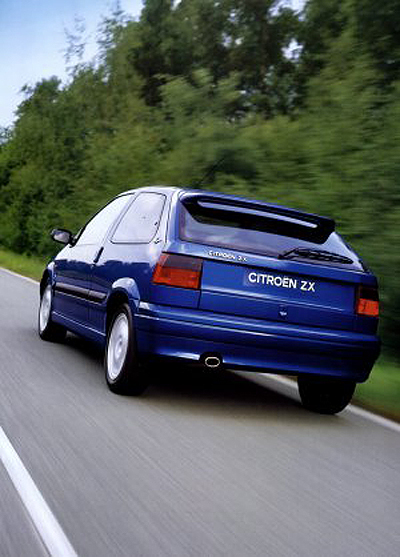
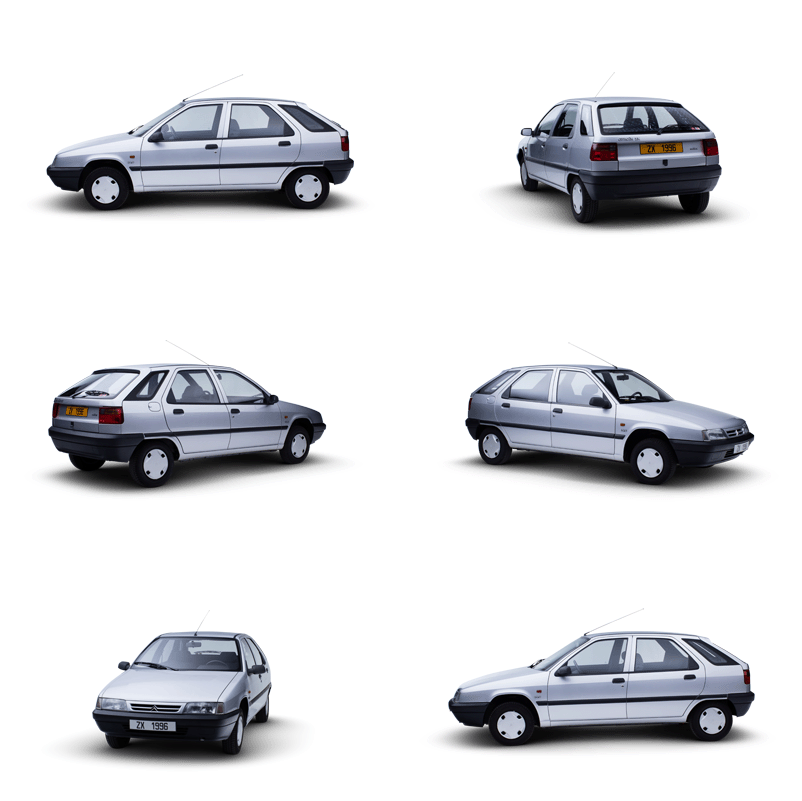
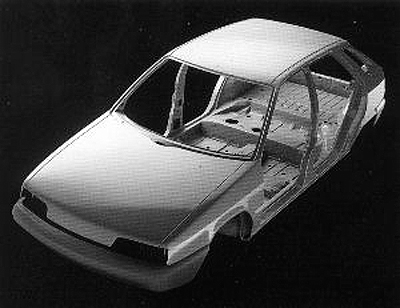
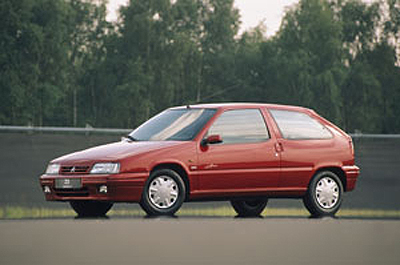
Only one body style
was available at launch - a five door hatchback but
this was soon extended to include a three door variant
and an estate.
|
|
|
|
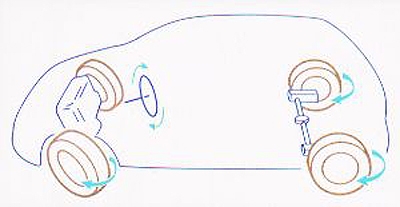
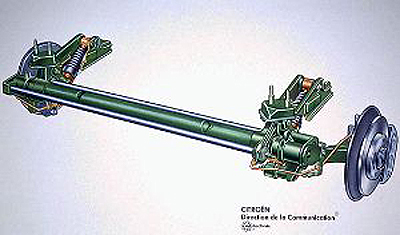
Mechanical
innovation was not completely dead however - the rear
suspension incorporated a passive rear steer axle
which enabled the ZX to outhandle most of its rivals
while still offering the kind of ride quality for
which Citroën is renowned.
Maximum advantage
was taken to reduce costs and the ZX shared many of
its components with the Peugeot 305 including the
floorpan.
|
|
|
|
In 1991 the ZX was
made available with a 1,9 diesel engine in Reflex,
Aura and Avantage trim levels and in 1992, the three
door body was introduced. The same year, all engines
were fitted with fuel injection and catalytic
convertors were also fitted. The same year, the Aura
1,8 and Volcane 2,0 16V were launched, the latter
being fitted with the engine from the Peugeot 405 Mi16
and an eight valve 2,0 litre engine was also offered
together with a 1,9 Turbo Diesel. The 1,1 litre
version was only available in three door guise and
automatic gearboxes were available on all models apart
from the 1,1 and 1,4.
|
|
|
|
Avantage
above
|
|
|
|
Aura
above
|
|
|
|
|
|
|
|
|
|
|
|
|
 |
|
|