|
In
the late fifties, Citroën's model line
up comprised the 2 CV and the D Series,
the former being designed to cater for
the bottom end of the market and the
latter aimed at the upper echelons.
There was a yawning chasm between these
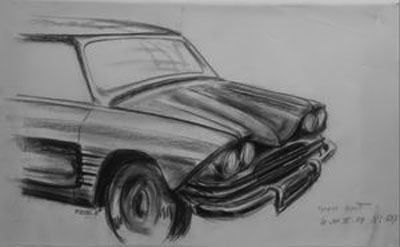
two extremes and the company undertook a
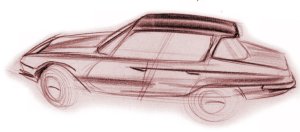
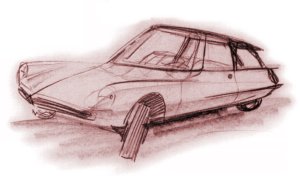
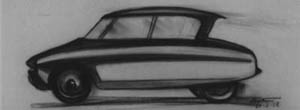
number of design studies including
the Cocinelle
and the C-60 in an
attempt to plug the gap.
The
rise of the middle classes throughout
Europe created a demand for a more
luxurious,stylish and faster car than
the 2 CV while remaining economical to
run - the company had hoped the ID 19
would fill this role.
In
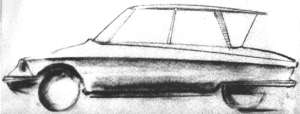
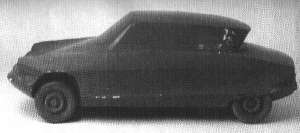
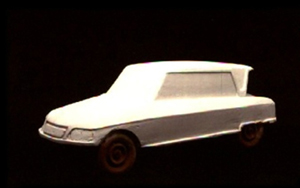
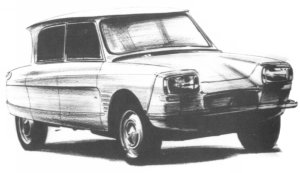
1959, Pierre Bercot laid down the design
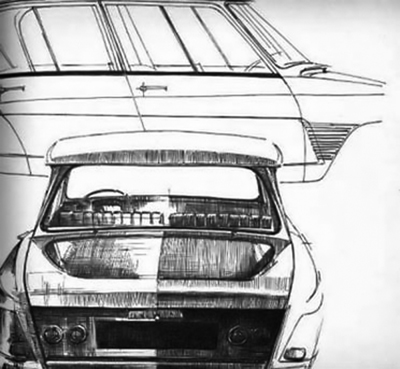
brief: - a large boot and seating for
five in a car that must be no longer
than four metres and no hatchback.
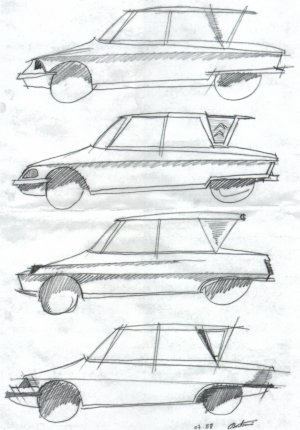
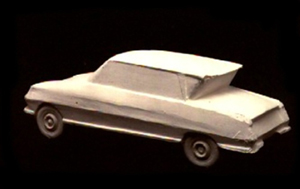
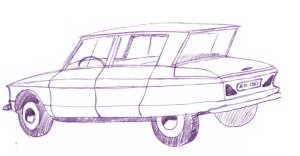
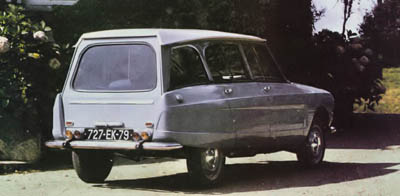
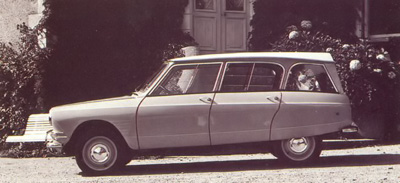
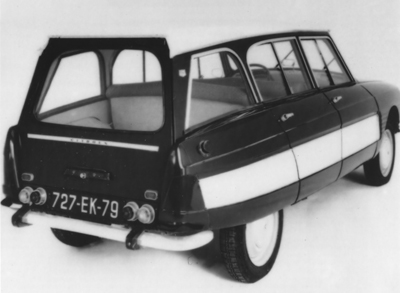
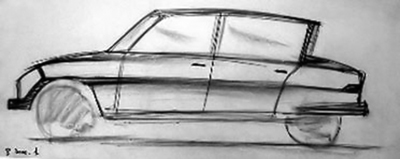
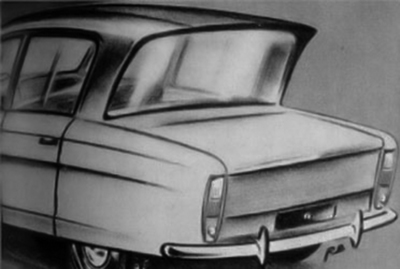
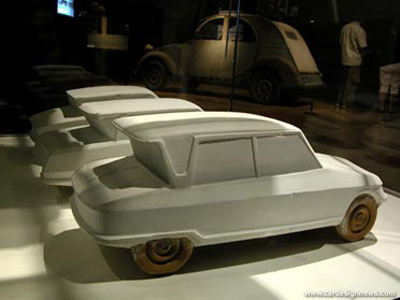
This latter restriction meant that
Bertoni was obliged to create a classic
three box design and in order to provide
sufficient room for the rear passengers,
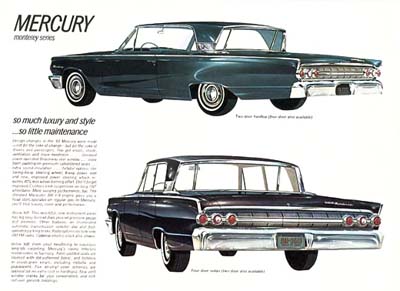
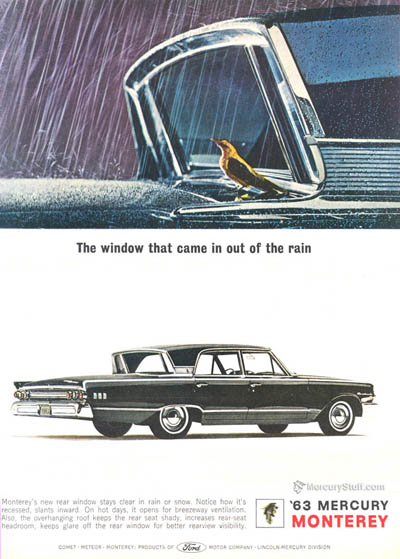
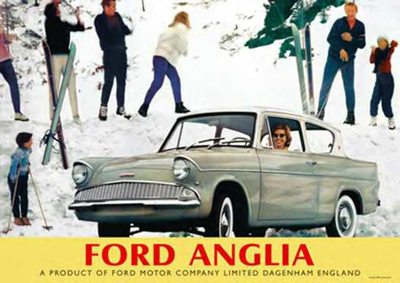
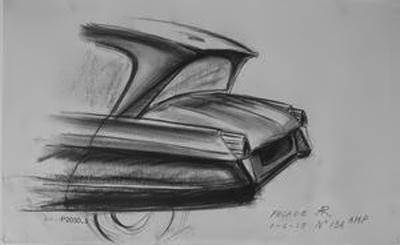
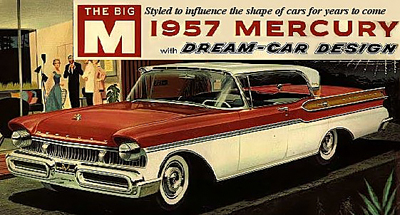
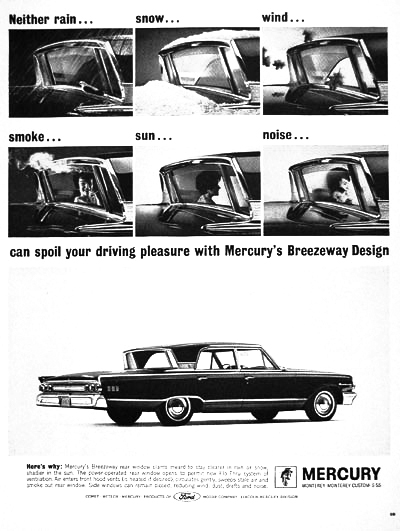
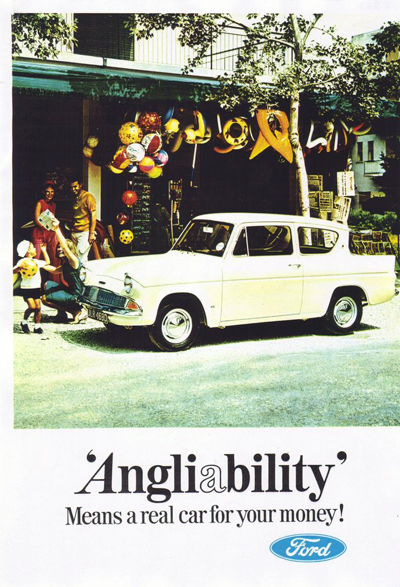
he was obliged to use the reverse slope
rear screen that had been pioneered in
the USA by Ford's
Mercury division and in Europe by
Ford of Great Britain
with their Anglia.
A
number of different engines were
considered - a flat four comprising two
2CV units with a displacement of about
950 cm3, the 610 cm3 flat twin developed
by Panhard,
or to develop a larger capacity version
of the flat twin from the 2CV. It
was felt that using the Panhard flat
twin would result in the new car
competing with the Panhard
24 which was under
development. By this time, Panhard
was being run by Citroën. The
decision was taken to use an enlarged
version of the 2CV engine and for the 24
to be a two door car only.
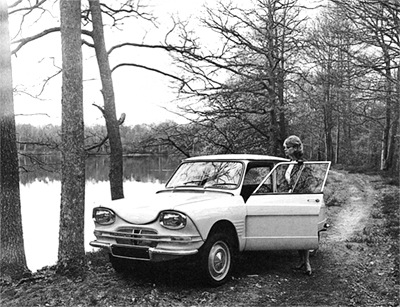
Due
to budgetary constraints, the decision
was taken to develop the 2 CV - a new
602 cc engine and a new, much less
utilitarian body but fitted to the 2CV
chassis and employing that car's
interconnected suspension.
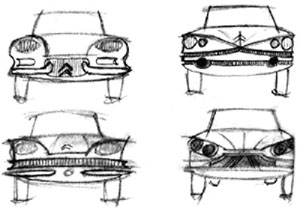
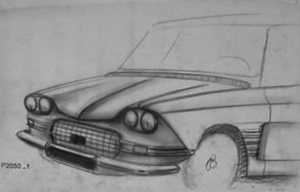
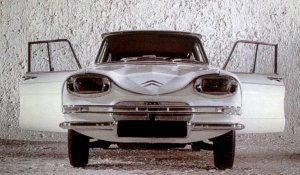
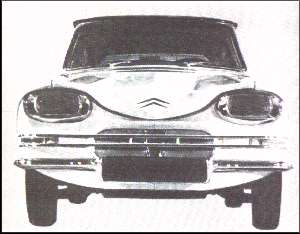
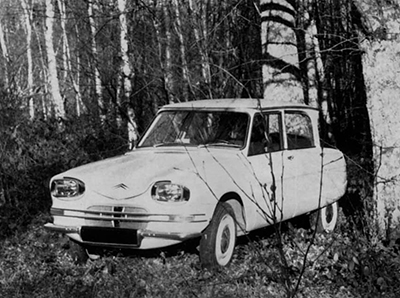
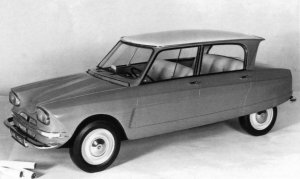
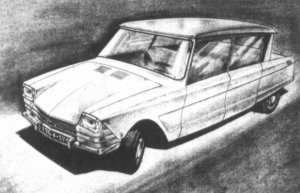
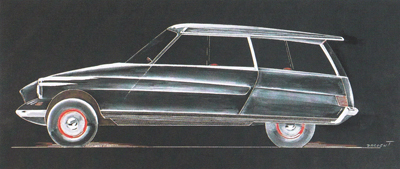
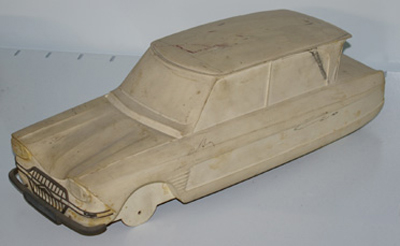
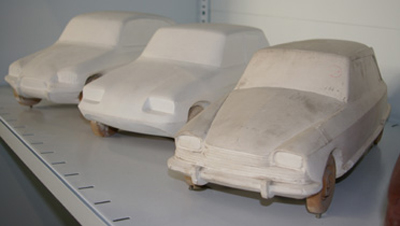
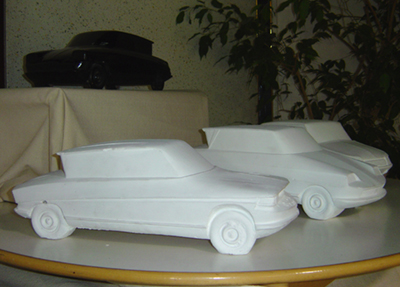
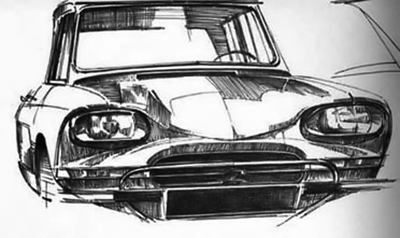
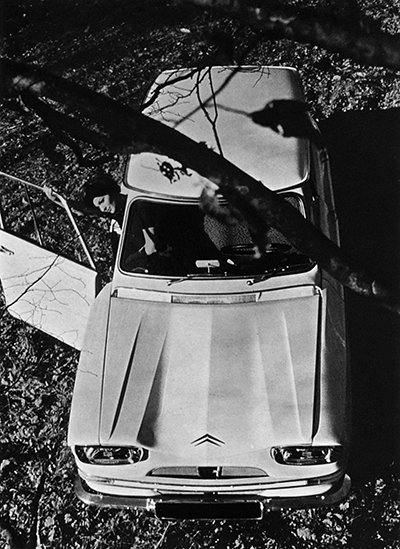
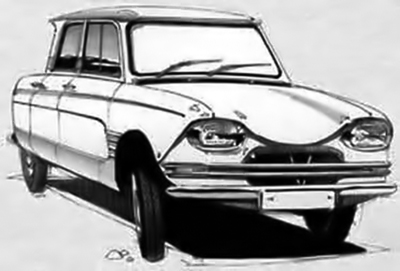
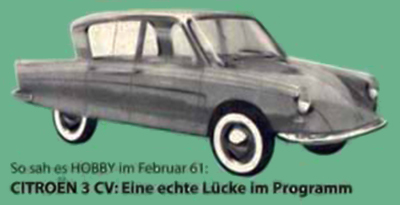
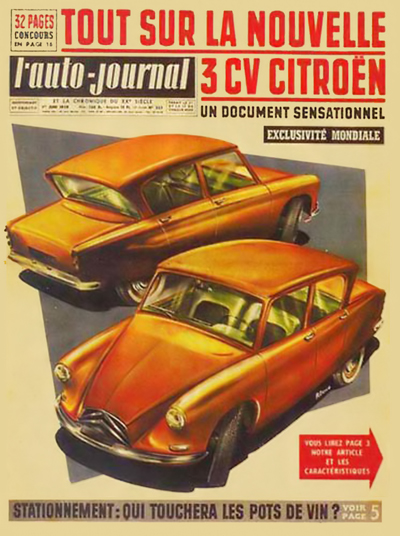
Flaminio Bertoni came up with the design
that he later described as his
favourite.
|